Do Invisible Dog Fences Work?
Yes, invisible dog fences work for most dogs when the yard suits the system and the dog gets proper boundary training. A radio wire or wireless transmitter marks the edge, the collar warns as your dog approaches, and the correction only follows if the dog keeps going.
On this page (11 sections)
- How does an invisible dog fence actually work?
- Do invisible dog fences work for most dogs?
- How do the warning and correction zones behave?
- What changes when you choose a wireless system instead of a wired one?
- What should you expect from the first two weeks?
- How reliable is an invisible fence compared with a real one?
- Can an invisible fence keep every dog in?
- Do GPS collars change the answer?
- How far does a wireless fence reach?
- So, do invisible dog fences work well enough to buy?
- Our score weighs specs, features and buyer feedback against what you're shopping for.
Do invisible dog fences work? Yes, for most dogs on a yard that suits the system and with real boundary training.
A transmitter marks an edge, the collar warns your dog as it gets close, and the correction only lands if your dog keeps moving out.
The honest version is less tidy than the marketing. An invisible fence is a training tool with electronics attached, so the collar does its job only after your dog has learned what the tone means.
How does an invisible dog fence actually work?
An invisible fence creates a warning zone and a correction zone along a boundary your dog can't see, and the collar reacts as your dog moves through them. How that boundary gets marked is the main difference between systems.
A buried-wire fence runs a cable around the yard and the transmitter sends a radio signal along it. A wireless fence skips the wire and sends a circular radio field from a single transmitter.
A GPS fence draws a virtual line in an app and the collar reads its position by satellite.
The collar follows the same pattern in all three. Inside the safe area it stays quiet.
Near the edge it gives a warning, usually a tone or vibration. Cross into the correction band and a static pulse follows.
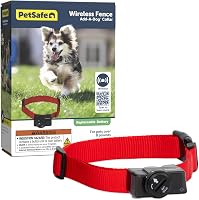
PetSafe describes its boundary as one that "gently guides your dog back to the play area," and the PetSafe Wireless collar has a tone-only setting plus 5 levels of correction. That range matters, since a soft setting suits a timid dog and a firmer one suits a dog that ignores the warning.
Do invisible dog fences work for most dogs?
They work for most dogs once the collar, the flags and the training all line up. The dog has to notice the warning, connect it to the edge, and turn back before the pulse arrives.
That learning needs repetition in short sessions. A dog corrected near the edge without understanding why may just avoid the whole yard.
That's why most kits ship with training flags and a step-by-step plan.
Some dogs are poor matches. A dog with intense prey drive may accept the pulse to chase a rabbit.
A dog that panics at a static sensation may freeze or bolt instead of turning back. Young puppies and dogs that already fear collars need a different approach.
The yard matters too. A wireless circle needs an outlet and clear space for the field.
A GPS collar needs sky view, and Dogtra says GPS is "usually accurate within 3-15 feet," so the boundary should sit well inside your property line.
How do the warning and correction zones behave?
The collar gives a warning first and a correction second, and the size of that gap decides how fair the system feels to your dog. A wide warning zone gives your dog time to turn; a narrow one feels like a trap.
On the PetSafe Wireless Dog Fence, the adjustable circular range runs from 5 to 90 ft in all directions from the transmitter, or up to 180 ft across. The signal fades as your dog approaches the edge, so the tone starts before the correction band.
Set the warning zone wide enough that your dog can stop and turn at a run. Then raise the correction level only if your dog ignores the tone.
Starting at the highest level to "make it stick" is how you get a dog that refuses to go outside.
What changes when you choose a wireless system instead of a wired one?
A wireless fence works without burying any wire, which is why it sets up in a couple of hours instead of a weekend. The trade-off is a circular boundary you can't reshape around a driveway or a garden bed.
The PetSafe Wireless Dog Fence covers up to 1/2 acre from a portable indoor transmitter, and you can expand it with an additional transmitter. Because it's portable, it also travels to a campsite or vacation rental with an outlet.
The Stay & Play Compact pushes the same idea to 3/4 acre with a 22 to 105 ft radius. Its LCD screen shows how far the play area reaches and flags system errors, and the receiver collar is rechargeable and waterproof for dogs 5 lb and up.
Both PetSafe models share static-free reentry. Your dog can come back through the boundary without another correction, which stops the edge from becoming a one-way gate.
What should you expect from the first two weeks?
Expect two to four weeks of short daily training sessions before the boundary feels reliable. The collar does the correcting, but you do the teaching.
Start with the flags and a leash. Walk your dog past the flags and let the warning tone sound, then guide your dog back into the safe area before the correction fires.
Repeat at several points around the boundary so the lesson isn't tied to one spot.
Keep sessions to 10 or 15 minutes. Feed meals and play inside the safe zone so the yard stays a good place.
Watch for the dog that won't approach the flags at all. That's a sign the correction level is too high or the warning zone too narrow, so drop the level and widen the band before you continue.
How reliable is an invisible fence compared with a real one?
An invisible fence is less of a physical barrier and more of a trained habit. It works well as backup, but it doesn't stop a dog that decides the chase is worth the correction.
A physical fence blocks a dog with no training and no battery. An invisible fence depends on the collar being charged and fitted, the transmitter having power, and your dog choosing to respect the warning.
Power cuts, a dead battery or a loose collar all open the gate.
That's why the two often pair well. Use the invisible fence to reinforce a physical boundary, and use the real fence as the thing that actually holds the line.
Our comparison of invisible fence vs regular fence walks through the trade-offs.
Check local rules as well. Many HOAs and some local rules treat an invisible fence differently from a visible one, so check before you install anything.
A dog left alone all day behind an invisible fence only is not a safe setup.
Can an invisible fence keep every dog in?
No. An invisible fence fails with dogs that push through the correction, and those dogs need a physical fence or supervised outdoor time.
Recognizing that early saves you money and frustration.
Skip an invisible fence for a dog that has already climbed or dug out of a real fence, or one that ignores a static correction on the highest level. Skip it too if your yard has a public sidewalk or road right at the boundary, since a failed lesson there is a safety problem.
A collar that slides or sits too loose makes the correction inconsistent. The PetSafe Wireless collar fits dogs 8 lb and up on necks 6 to 28 in.
The Stay & Play collar fits dogs 5 lb and up on the same neck range. If you're shopping for a replacement or a second collar, our guide to the best dog collar for invisible fence covers fit and compatibility.
Do GPS collars change the answer?
GPS collars work on the same warning-and-correction principle, but the boundary lives in an app instead of in a radio field. That makes odd-shaped yards possible, at the cost of a satellite fix.
The Dogtra GPS Fence sets circular or custom boundaries in a free app with no subscription. It supports up to 30 fences and up to 3 dogs on the same profile.
The collar runs in tone, vibration or stimulation with 100 levels, and Dogtra says smart detection disables correction when your dog is returning.
Dogtra designs it for properties 3/4 acre or larger, and the collar is for outdoor use only. On a smaller yard the warning and correction zones can compress and leave your dog too little room to learn.
Our explainer on how a GPS dog fence works covers the satellite side in more depth.
How far does a wireless fence reach?
A wireless fence reaches as far as its transmitter's circular field allows, and that limit is the first spec to check against your yard. Range and yard shape together decide whether the system fits.
The PetSafe Wireless Dog Fence covers up to 1/2 acre, adjustable from 5 to 90 ft in every direction. The Stay & Play Compact goes to 3/4 acre, 22 to 105 ft in all directions.
A rectangular lot with the house at one end may leave corners outside the circle. Place the transmitter so the circle covers the areas your dog uses and keeps the boundary away from the road.
Our guide to wireless dog fence range explains how to measure before you buy.
So, do invisible dog fences work well enough to buy?
They do, if your dog is a reasonable match and you commit to the training. Buy one when you have a yard that fits the boundary shape and time for daily flag sessions.
Pick the PetSafe Wireless Dog Fence for a simple circle up to 1/2 acre and static-free reentry. Pick the Stay & Play Compact when you want more range and an LCD readout.
Pick the Dogtra GPS Fence when your property is 3/4 acre or larger and you want custom boundaries without a subscription.
Don't buy one as a substitute for supervision or a real fence on a risky lot. An invisible fence works when it's set up honestly and trained properly, and that's the whole answer.
Our score weighs specs, features and buyer feedback against what you're shopping for.
If you want a dog contained without digging, a wireless system is the quickest path. Set the circle, fit the collar, and run the flags before you trust it.
Frequently asked questions
Do invisible dog fences hurt dogs?
The static correction is a short pulse that most dogs notice but aren't injured by. Fitting the collar correctly matters, since contact points that sit too loose or press into the neck make the pulse unpredictable.
Tone or vibration modes give you a gentler first step.
Can an invisible fence work without a correction?
Yes. You can run the collar in tone-only mode and use the warning as the whole lesson.
Reentry is static-free on the PetSafe wireless models, so your dog can come back through the boundary without another correction.
How long does it take for a dog to learn an invisible fence?
Expect two to four weeks of short daily flag sessions before your dog understands the warning zone. Keep the dog on a leash near the boundary during that time and never leave it loose at the edge until the response looks reliable.